LM-79 Liikkuvan ilmaisimen goniofotometri (peilityyppi C)
LSG-6000
High Precision Rotation Luminaire Goniophotometer
LSG-1890B
High Precision Rotation Luminaire Goniospektroradiometri
LSG-1890BCCD

Goniofotometri auto- ja merkkilamppuihin
LSG-1950
Goniofotometri liikennevaloille (edullinen malli)
LSG-1950S
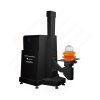
Goniofotometri lentokentän valaistukselle
LSG-1940
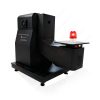
VAD-palohälyttimen visuaalinen hälytyslaite Goniofotometri
LSG-1930
Kompakti Goniofotometri
LSG-1200A
LED-goniofotometri
LSG-1100
Near Field Moving Detector Goniophotometer
LSG-1900B
 LEDit ja valaisintestiratkaisut
 LM-79 ja LM-80 Testiratkaisut
 LED-ohjaintestiratkaisut
 Kodinkoneiden testausratkaisut
 Mobiili- ja verkkotestiratkaisut
 Autoteollisuuden elektroniikkatestausratkaisut
 Audio-video- ja IT-testausratkaisut
 Kaapeli- ja johdintestausratkaisut
 Pistokkeiden ja pistorasioiden testausratkaisut
 Virtakytkimen testausratkaisut
 Muuntajan testausratkaisut
 Sähkölelujen testausratkaisut
 Energiamittarin testausratkaisut
 Moottorikäyttöisten työkalujen testausratkaisut
Valitse organisaatio
selata standardeja
Abstrakti
During production, transportation and end‑user operation, consumer electronics and LED lighting products are inevitably exposed to electrostatic discharge interference generated by human bodies or ambient conditions. Electrostatic pulses may cause screen flicker, program crash, system reset or permanent damage to hardware components. An ESD Immunity Tester serves as the core test instrument to simulate such electrostatic interference and complete pre‑compliance verification for products. The LISUN ESD61000‑2 series electrostatic discharge generator, also known as electrostatic discharge simulator, electrostatic discharge immunity tester, ESD generator or ESD electrostatic tester, is a high‑precision instrument developed by LISUN specifically for electrostatic discharge immunity testing of electrical and electronic equipment. Its core function is to meet the performance evaluation requirements of various products under electrostatic disturbance scenarios. By accurately reproducing electrostatic discharge pulses, it provides standardized test conditions for verifying the operational stability of equipment exposed to electrostatic interference. Centered on the technical principles of the ESD Immunity Tester and combined with the parameter specifications of the ESD61000‑2 series, this paper discusses the key application points in pre‑compliance testing for consumer electronics and LED lighting, offering references for R&D laboratories to build electrostatic immunity test environments.
With the continuous integration improvement of consumer electronics and LED lighting products, the internal chips and drive circuits become more vulnerable to electrostatic discharge. Human contact with equipment housings, assembly operations on production lines and triboelectric charging in dry environments can generate electrostatic discharge pulses at kilovolt levels. Although the energy of these transient pulses is relatively low, they can easily penetrate product circuits and trigger functional anomalies. If sufficient pre‑compliance testing is not carried out before submitting products to third‑party institutions for formal EMC certification, failures in ESD test items are highly likely to occur, resulting in project delays and increased revision costs.
An ESD Immunity Tester can reproduce real‑world electrostatic discharge phenomena under laboratory conditions and complete preliminary verification in the product development phase to expose defects in hardware protection design in advance. The LISUN ESD61000‑2 series ESD Immunity Tester complies with GB/T 17626.2‑2018 and IEC/EN 61000‑4‑2 standards. It is equipped with a bilingual Android touch screen and built‑in standard test routines, supporting contact discharge and air discharge as two basic test modes for pre‑compliance validation of consumer electronics, LED luminaires and LED driver power supplies during the R&D stage. Many developers only focus on the output voltage of the instrument while ignoring critical conditions such as discharge rise time, discharge RC network and grounding layout of the test bench, which may distort pre‑compliance test results and fail to reflect the actual electrostatic resistance of products. Therefore, a full understanding of the technical specifications and supporting test conditions of the ESD Immunity Tester is essential to obtain valid and reliable pre‑compliance data.
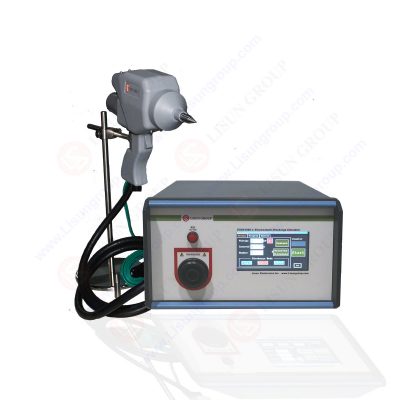
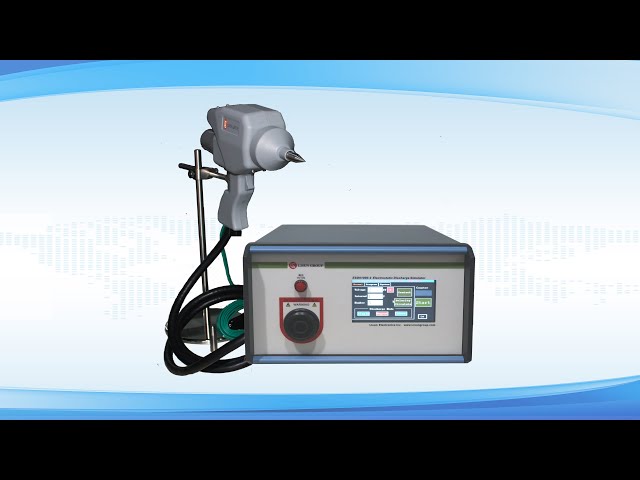
ESD61000-2_Sähköstaattisen purkauksen simulaattori
In accordance with GB/T 17626.2‑2018, an ESD Immunity Tester shall reproduce electrostatic discharge pulses with defined waveforms, where the rise time of discharge current shall be controlled within the range from 0.6 ns to 1 ns, and the default discharge RC combination defined by the standard is 150 pF/330 Ω. The output voltage shall support positive and negative polarity switching, with manual trigger and automatic trigger available. The discharge count and discharge interval can be freely configured. Contact discharge is applied directly to conductive enclosures and metal contacts of equipment, while air discharge targets insulated housing surfaces. Both test modes are indispensable for consumer electronics and LED lighting products.
In addition to the performance of the main unit itself, the test environment of the complete test system exerts a significant influence on test results. The standard requires a dedicated electrostatic test bench equipped with a horizontal coupling plane, vertical coupling plane, reference ground plane and insulating liner. Without a standard test bench and qualified grounding impedance, the energy of electrostatic pulses will be altered. Even if the main unit of the ESD Immunity Tester meets all specification requirements, the final test results will still lose reference value. For test scenarios with higher requirements, a calibration kit is optional to periodically verify discharge waveforms and ensure long‑term measurement accuracy. The LISUN ESD61000‑2 series includes multiple sub‑models with differences in output voltage, relay service life and configurable discharge RC modules. R&D laboratories shall select appropriate models according to the categories of equipment under test. Key parameters of main models are listed in the table below.
| Tekninen parametri | ESD61000‑2P | ESD61000‑2 | ESD61000‑2A | ESD61000‑2C |
|---|---|---|---|---|
| Form Factor | Kannettava | pöytäasenteiset | pöytäasenteiset | pöytäasenteiset |
| Lähtöjännite | 0.1–20 kV ±5 % | 0.1–20 kV ±5 % | 0.1–30 kV ±5 % | 0.1–30 kV ±5 % |
| Purkausvirran nousuaika | 0.6 ~ 1ns | 0.6 ~ 1ns | 0.6 ~ 1ns | 0.6 ~ 1ns |
| Purkaus RC-moduuli | 150pF/330Ω (replaceable) | 150pF/330Ω (replaceable) | 150pF/330Ω (replaceable) | Multiple replaceable RC networks |
| Purkaustila | Kosketuspurkaus, ilmapurkaus | Kosketuspurkaus, ilmapurkaus | Kosketuspurkaus, ilmapurkaus | Contact Discharge, Air Discharge, Round‑tip Electrode |
| Purkausten määrä | 1-9999 | 1-9999 | 1-9999 | 1-9999 |
| Soveltuvat standardit | GB / T 17626.2 | GB / T 17626.2 | GB / T 17626.2 | GB/T 17626.2, ISO 10605 |
The ESD61000‑2P is a portable version suitable for on‑site preliminary testing. The ESD61000‑2 is a standard benchtop model with a 20 kV output, which covers pre‑compliance test requirements for most ordinary consumer electronics and conventional LED lighting products. The ESD61000‑2A delivers a maximum output of 30 kV for products requiring higher air discharge levels. The ESD61000‑2C is equipped with multiple replaceable RC networks and a dedicated large round‑tip electrode. In addition to general electrostatic tests, it can meet test requirements defined by the automotive electronics standard ISO 10605. For pre‑compliance testing, it is recommended to configure the ESD‑DESK electrostatic test bench to establish a complete test environment. The optional ESD‑CALA calibration kit can be adopted for periodic waveform verification of the instrument.
Consumer electronic products such as phone chargers, adapters, Bluetooth speakers and small household appliances feature exposed conductive parts including metal buttons and connector contacts, while most housings are made of insulating plastic. Both contact discharge and air discharge tests are required. In the development phase, developers adopt the ESD61000‑2 ESD Immunity Tester to apply electrostatic pulses to each key test point according to specified test levels, and observe whether the device under test encounters crash, reboot or functional disorder. Once anomalies are captured during testing, hardware engineers can modify protection circuits selectively, add ESD protection components and optimize PCB routing to complete rectification before sending samples to third‑party certification laboratories and avoid certification failure risks. In many consumer electronics R&D laboratories, the ESD Immunity Tester serves as a mandatory instrument for development verification. Preliminary tests are carried out repeatedly during prototype iterations to continuously improve the electrostatic protection performance of products.
LED luminaires and LED driver power supplies are widely deployed in residential and commercial lighting scenarios. Electrostatic interference may occur when users install or touch lamp housings and during assembly on production lines. LED drivers inside luminaires belong to switching‑mode power supply circuits that are sensitive to electrostatic pulses. Electrostatic impact may cause abnormalities in driver chips, resulting in lamp flicker, light‑off or permanent damage to driver power supplies. The ESD61000‑2 ESD Immunity Tester is adopted for pre‑compliance testing to apply contact discharge and air discharge to metal lamp housings, power input and output interfaces, control buttons and other positions, reproduce electrostatic disturbance phenomena and evaluate the electrostatic resistance of luminaires.
Test levels vary for different types of LED lighting products. Common indoor LED luminaires generally adopt ±6 kV contact discharge and ±8 kV air discharge, while some outdoor lighting products require higher test grades. Through pre‑compliance tests performed with the ESD Immunity Tester, developers can evaluate the rationality of selected protection components such as TVS diodes and varistors, inspect grounding design and identify weak points in driver circuits in advance, laying a solid foundation for subsequent EMC certification of luminaires.
Pre‑compliance tests performed with an ESD Immunity Tester cannot be treated as official certification tests. Pre‑compliance testing provides reference data for R&D activities and cannot be used to issue formal test reports. Firstly, the complete test environment shall comply with standard specifications as far as possible. A dedicated electrostatic test bench and ground plane are preferred instead of conducting electrostatic discharge tests directly on ordinary office desks, otherwise considerable deviations will appear in test results. Secondly, operators shall master the standard operation procedures for contact discharge and air discharge. The moving speed of the electrode for air discharge and vertical alignment of the electrode for contact discharge against test points directly affect the actual electrostatic pulse waveform applied to the product.
The instrument shall be submitted for periodic metrological calibration to guarantee that discharge rise time and output voltage stay within the tolerance range defined by standards. Test levels, discharge points and failure phenomena of the equipment under test shall be fully recorded during testing to facilitate fault localization for hardware teams. Even if all pre‑compliance tests are passed, non‑conformity may still appear during third‑party laboratory certification due to differences in test environments and prototype conditions. Developers shall maintain an objective understanding of the functions of pre‑compliance testing.
An ESD Immunity Tester is critical equipment for electrostatic immunity pre‑compliance verification of consumer electronics and LED lighting products in the R&D phase. As a high‑precision ESD Immunity Tester, the LISUN ESD61000‑2 series electrostatic discharge generator can accurately reproduce electrostatic discharge pulses and provide standardized test conditions for evaluating the operational stability of electrical and electronic equipment under electrostatic interference. When selecting instruments, enterprise R&D laboratories shall choose appropriate models based on product categories and target test levels, and attach importance to peripheral configurations including test benches and ground planes while implementing standardized test workflows. Sufficient pre‑compliance verification can identify weaknesses in product electrostatic protection design at an early stage, reduce revision costs in later certification phases and help consumer electronics and LED lighting products successfully obtain relevant EMC compliance certifications.
Tunnisteet:ESD61000-2Sähköpostiosoitettasi ei julkaista. Pakolliset kentät on merkitty *

 Englanti
 中文简体
中文简体 Русский
 Español
 Português
 Türkçe
 العربية
 Deutsch
 Polski
 Italiano
 Français
 한국어
한국어 ไทย
ไทย Tiếng Việt
 日本語
日本語